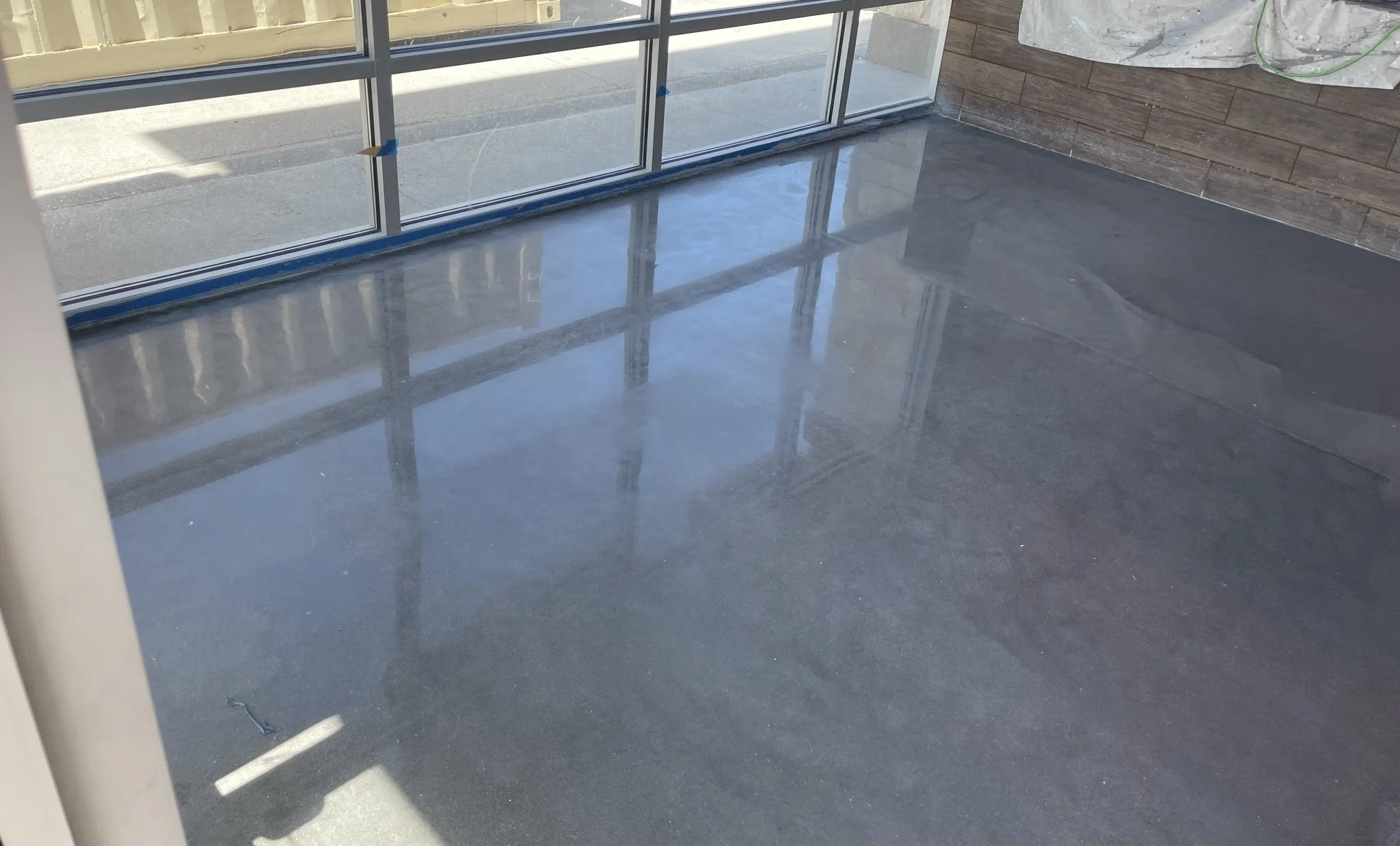
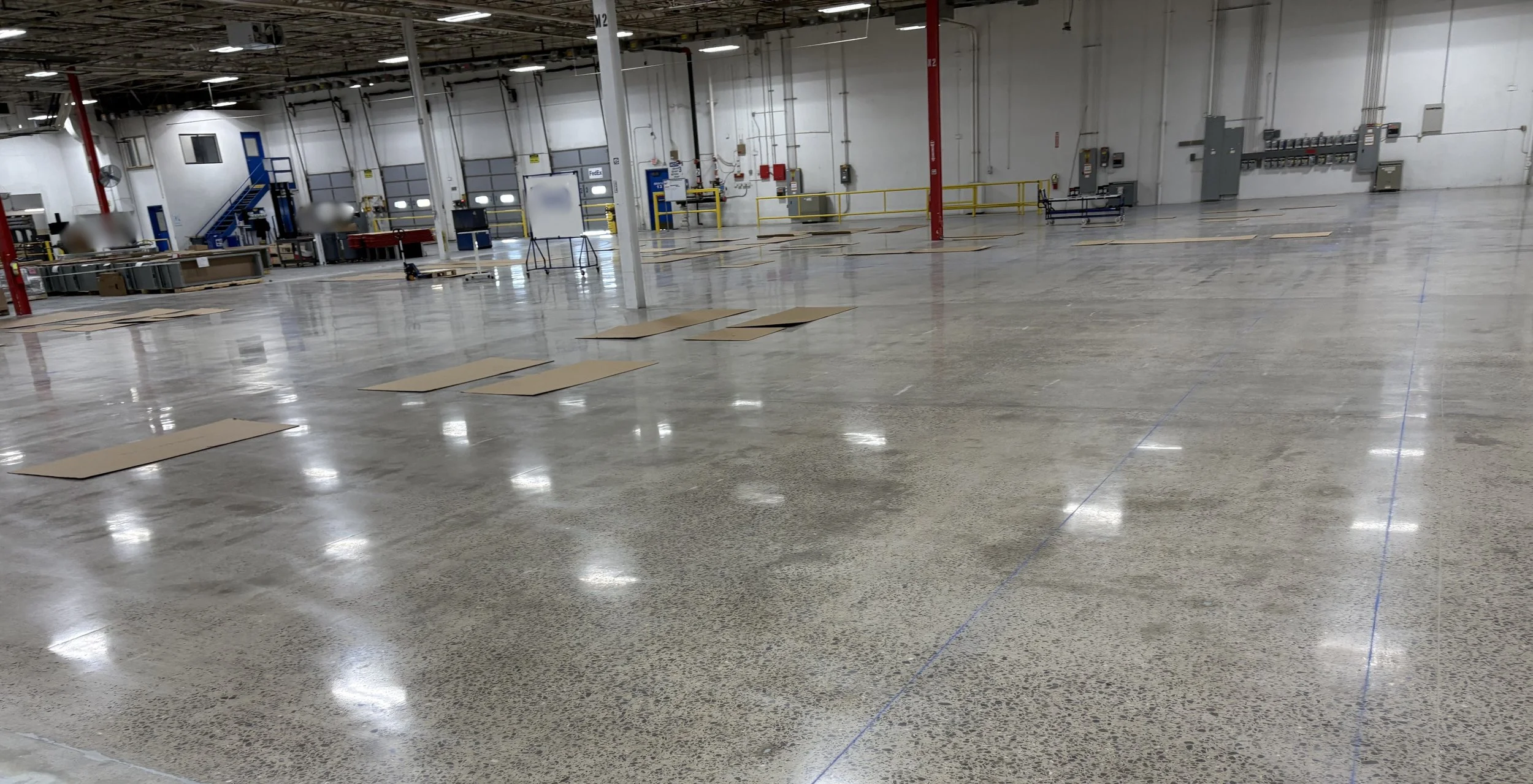
Polished concrete is a mechanically refined concrete surface achieved through progressive grinding, honing, and polishing using industrial diamond abrasives. The process densifies the concrete substrate with a chemical hardener, increasing surface hardness, abrasion resistance, and durability while producing a smooth, reflective finish.
Depending on the level of aggregate exposure and desired sheen, polished concrete can range from a low-sheen matte finish to a high-gloss, mirror-like appearance. The system is typically classified by:
Aggregate Exposure: Cream, Salt & Pepper, Medium Aggregate, or Full Aggregate.
Gloss Level: Matte, Satin, Semi-Gloss, or High Gloss.
Key Performance Characteristics:
High abrasion and wear resistance
Reduced dusting through surface densification
Low maintenance requirements
Improved light reflectivity
Resistance to forklift traffic and heavy commercial use
Long service life with minimal lifecycle costs
Common Applications:
Retail stores
Warehouses
Distribution centers
Automotive showrooms
Educational facilities
Airports
Commercial office spaces
Polished concrete is a mechanically refined concrete surface achieved through progressive grinding, honing, and polishing using industrial diamond abrasives. The process densifies the concrete substrate with a chemical hardener, increasing surface hardness, abrasion resistance, and durability while producing a smooth, reflective finish.
Depending on the level of aggregate exposure and desired sheen, polished concrete can range from a low-sheen matte finish to a high-gloss, mirror-like appearance. The system is typically classified by:
Aggregate Exposure: Cream, Salt & Pepper, Medium Aggregate, or Full Aggregate.
Gloss Level: Matte, Satin, Semi-Gloss, or High Gloss.
Key Performance Characteristics:
High abrasion and wear resistance
Reduced dusting through surface densification
Low maintenance requirements
Improved light reflectivity
Resistance to forklift traffic and heavy commercial use